

Regenerative Agriculture + Climate

What’s at Stake for School Food-Literacy Programs
Rita Elaine Leary has been a middle school science and social sciences teacher for 36 years—31 of them in Chicago’s public schools. For the last four years, she’s incorporated a food education curriculum into her classes at Ashburn Community Elementary School. She has never seen her students so engaged as they taste spice mixes to understand West Africa’s influence on Spain, prepare Ukrainian dumplings to appreciate the culture of that war-torn country, and bake bread to learn about cellular respiration. “Food education takes it to another level,” Leary says. “I’ve done robotics, and that draws in a bunch of kids. I’ve done coding. Some kids really love coding. We’ve written science musicals. That gets some kids. But food? Pretty much every single attempt has been a win.” This school year will be her fifth time using curriculum from food education nonprofit Pilot Light, she says, “and I’m not going to stop.”

Weathering Climate Shocks: How Restaurants Survive Supply Disruptions
When Peter Platt was in Newport, Oregon in 2018, visiting Local Ocean Seafoods to bring them on as a supplier, he spoke with some of the fishermen docked outside the waterfront fish market and restaurant. “All the salmon fishermen were like, ‘We don’t even bother to fish off the coast here anymore. Everyone heads to Alaska,’” says Platt, founder and owner of Portland’s high-end Peruvian restaurant Andina. “‘There’s just no fish.’” The dearth of Pacific salmon, he learned, was partly due to warming waters in salmon streams and drought-fueled water shortages, which are lethal to salmon eggs and juvenile fish. Platt, who is in charge of sustainability initiatives at Andina, did the only thing he could: He and his staff took salmon off Andina’s menu.
“We’re just not going to offer it,” he says. “It’s either unavailable or too expensive for the quality. . . . climate has a lot to do with it.”

Could You Transform Your Yard into a Flourishing Wildlife Haven?
Four years ago, Melody Murray started noticing these cute signs in her Portland, Oregon neighborhood of Sullivan’s Gulch. Posted in residents’ front yards, the signs read: “Certified Backyard Habitat” with a drawing of a black, red and white spotted towhee sitting on a leafy branch.
“I didn’t know what they were for,” says the Ohio native who moved to Oregon in 1994. Her curiosity piqued, she went online and quickly found out: The Backyard Habitat Certification began as a joint project of Columbia Land Trust and Portland Audubon (now called the Bird Alliance of Oregon) to encourage urban residents to garden without pesticides, plant native plants and remove invasive species. All of these practices support a flourishing community of native birds, insects and other wildlife.

The Movement to Make America Rake Again
Ten years ago, when Michael Hall retired as dean of students at the Pacific Northwest College of Art and began to spend more time at home, he noticed an ear-splitting noise — something he’d never been around during the day to hear. “The neighbor’s contractor was rattling my windows and assaulting my ears!” he says. One day, he went out and met the contractor at the curb and said, “Can you dial back on the leaf blower? There’s only 10 feet between our houses and it’s really a nuisance.” The contractor responded, “If you kept better care of that side of your house, I wouldn’t have to do that.”
That launched Hall on a mission that he’s still leading to this day. “At first I started out as Don Quixote out there, tilting at windmills,” says Hall, who describes himself as an old Berkeley hippie. Today he’s not only a co-chair of Quiet Clean PDX, a grassroots organization that’s pushing to ban the use of gas-powered leaf blowers city-wide, but part of a growing national movement. More than 100 US cities have banned gas-powered leaf blowers and over 45 different organizations across the country are part of the Quiet Clean Alliance, from Quiet Clean Philly to Quiet Clean Seattle.

Doing What Comes Naturally
The first time I met winemaker Nate Ready, he was pouring his wines at Pairings wine bar in Portland, Oregon. With his long salt-and-pepper beard and intense yet humble manner, Ready reminded me of a cross between Rasputin and a young Dumbledore — if Dumbledore were a wizard of wine. I’d tasted natural wines before (that is, wines made from organic grapes using native yeast and minimal intervention), but these, from Hiyu Wine Farm in the Columbia River Gorge, were remarkable. One was a field blend of red varietals, another was a pét-nat, and yet another was an orange wine that had had skin contact for 100 days. They had one thing in common: They all tasted alive.
“You taste his wines, and they are unlike anything on the West Coast,” says Brian McClintic, founder and owner of Viticole, a wine club that creates custom blends with organic producers here and abroad. “You can’t really compare them to anything; they’re so distinctive.”
Whereas some winemakers see a division between winemaking and farming, for Ready, the two are inseparable. When you visit Hiyu, high above the Hood River, you get the impression right away that Ready and his co-founder, China Tresemer, work using the principles of biodynamic farming. Plump pigs joyfully stampede down the slope of the vineyard, and ducks, speckled guinea fowl, and Dexter cows keep the grasses down and fertilize the vines. Their guiding philosophy, however, is permaculture, an even more holistic way of farming that uses a diversity of plants and animals to create resiliency. The farm, a former pear orchard with a view of Mount Hood, evokes an English smallholding farm. McClintic, with a nod to J.R.R. Tolkien, calls it “Shire-y.”

The Snack Bag of the Future Won’t Be Made from Plastic
Florencio Cuétara is the kind of person who crosses the street to tell people to pick up their litter. One day, Cuétara, an avid diver, was swimming in the Mediterranean when he came across a plastic cookie bag. “This bag hits me in the face as I’m swimming. And I’m cursing whoever put it in there, as if it’s somebody else’s fault,” Cuétara says. “Then I realized that the bag was one of my bags — with my last name on it.”
Cuétara’s family business is Switzerland-based snack company Cuétara Foods, which makes 25 brands of cookies, biscuits and crackers sold all over the world. For Florencio, who was CEO for the Americas at the time, that moment was a turning point. “I was like, ‘I want to blame everybody else for this,” he says. “But I’m not an innocent party here. I’m part of the problem.’”

'Zero-Waste' Stores are Helping Consumers Cut Back on Plastic
Amber Haukedahl’s journey to zero-waste shopping started with a toothbrush.
Four years ago, the conservation biologist from Minneapolis decided to cut down on her plastic consumption, investing in household alternatives like mesh produce bags, unpaper towels and bamboo cutlery. But when Haukedahl turned to buying a bamboo toothbrush, the only options she could find were on Amazon — an e-tailer whose packaging habits she says would have “totally defeated the purpose.”
So Haukedahl, then 33, decided to become the retailer she was looking for. In 2018, she launched Tare Market, an e-commerce outfit selling products like reusable cutlery, washable face rounds, and compostable dental floss in plastic-free packaging — and shipping them in upcycled boxes and compostable packing. A year later, Tare opened its first brick-and-mortar location in Minneapolis’ leafy lakeside Nokomis neighborhood, following a successful online crowdfunding campaign.

The Spectacular Comeback of the American Farmers Market
Visit the main Portland Farmers Market on any given Saturday morning and you’ll see tables spilling over with rainbow chard, beets, leeks and all kinds of lettuce. You’ll see vendors selling homemade salsa and tortilla chips, and cheesemakers plying their brie. It’s a scene that’s become part of America’s urban fabric. Today, there are over 8,140 farmers markets around the country.
But it wasn’t always this way.
America’s interest in fresh, local food was well underway by the time Michael Pollan’s influential The Omnivore’s Dilemma became a bestseller in 2006 and Michelle Obama started a kitchen garden at the White House. But just a few decades prior, the beloved farmers’ market was all but extinct in the US. Its near death — and spectacular comeback — shows how social movements, economic shifts and government policy can converge to resurrect a food system that’s healthier for people, the planet and cities themselves.

How San Francisco Cracked the Urban Composting Code
California’s environmental achievements are something to behold. The state ranks first in the U.S. for growth in solar power generation and battery storage. It’s the national leader in cumulative electric vehicle sales and public EV charging stations. And it’s one of a growing number of states that aim to run entirely on carbon-free energy in the coming decades – a goal it briefly met, for about 15 minutes, on April 30.
Now, California is once again setting the pace on a critically important (if somewhat less glamorous) climate imperative: urban composting.

I'll be There
In late 2017 three Willamette Valley wine professionals—Jesus Guillén, Sofia Torres McKay, and Miguel Lopez—began dreaming up a continuing education program for Latino vineyard workers. Guillén had moved up from Chihuahua, Mexico, to Oregon in 2002 and fallen in love with the lush wine-growing region. Even though he was a trained computer engineer, he started picking grapes at White Rose Estate, where his father was the vineyard manager, and he soon got the winemaking bug.

Household Recycling Made Easier — For a Price
Jill Fransen considers herself a serious recycler, the kind of person who knows the difference between various plastics, takes care to sort them, and drives five miles from her home in Portland, Oregon’s, North Tabor neighborhood to drop off refuse at a recycling center.
Over nearly a dozen years, Fransen’s routine was pretty well established. Then in late 2020, she heard about Ridwell, a subscription-based recycling service that had just been introduced in Portland. For about $12 per month, Ridwell would pick up items — stuff that many recycling programs won’t accept, like certain plastics and spent lightbulbs — right from one’s front porch, and take everything to its local plant to sort and redistribute for recycling or re-use.
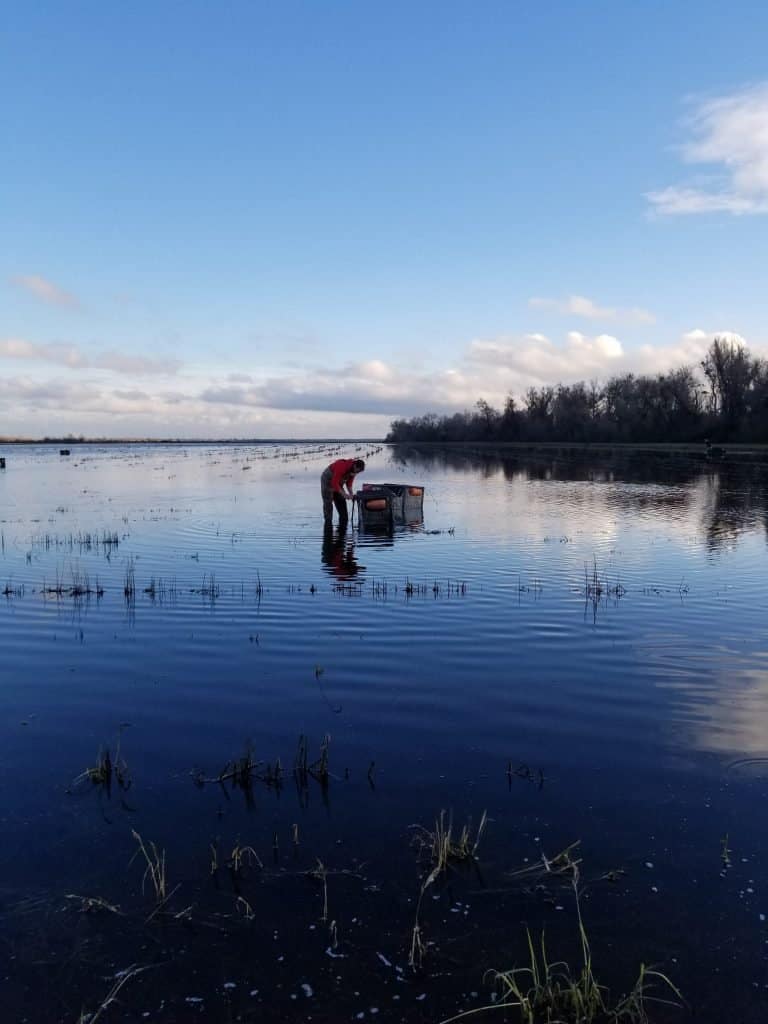
California’s Floodplains Are Coming Back, and So Are Their Salmon
Farmers and ecologists are partnering to restore the state’s natural flooding patterns, allowing native fish to thrive.
Until just a couple of centuries ago, inland California was a lush tapestry of wetlands and floodplains that nourished a thriving ecosystem of fish. But as the state — and its vast agriculture industry — has grown, its waterways have been modified drastically. Rivers have been drained, fields dried out, levees and dams constructed. These engineering feats, coupled with extreme drought, have decimated natural habitats. Today, a shocking 83 percent of native fish species in the state are in decline.

The Next Chapter for Farm to School: Milling Whole Grains in the Cafeteria
Nan Kohler founded the milling company Grist & Toll in Pasadena, California in 2013 and her freshly milled flours have been a hit with bakers, chefs, and locavores ever since. But her abiding wish is to sell California-grown, freshly milled whole grain flour, which is nutritionally superior to refined flour, to the public schools in the area.
“If I could sell to anybody, I would sell to the school lunch programs,” Kohler says. “Then we start those little healthy bodies young, and we change those palates to look forward to delicious whole grain foods. And set them up for healthier lifestyle and eating habits going forward.”
Not Your Grandmother's Milkman
When Julia Niiro founded MilkRun in Portland, Ore., in 2018, she wanted to combat two enduring challenges to local food systems: inefficient distribution and low farmer pay. Addressing these issues was necessary for smaller producers to disrupt an industry that’s “really, really good at processing cheap food and selling uniform waxed apples at the same place we go to buy our toilet paper,” as she put it in an impassioned 2019 TEDx Talk. But it’s much less successful at delivering the sustainably raised, flavorful food grown on nearby farms.
In America, efficiency and scale have superseded taste, nutrition, and the livelihood of the farmer who grows, raises, or otherwise produces our food. Producers get only 8¢ out of every dollar spent by consumers, on average.MilkRun’s mission is straightforward: “I want to make it as easy to buy from our local farmers as it is to book a stay in someone’s house or call a ride.”